

Why Four Years of Age is the Perfect Time to Start Learning Art !!
Jignesh Patel – March 2024
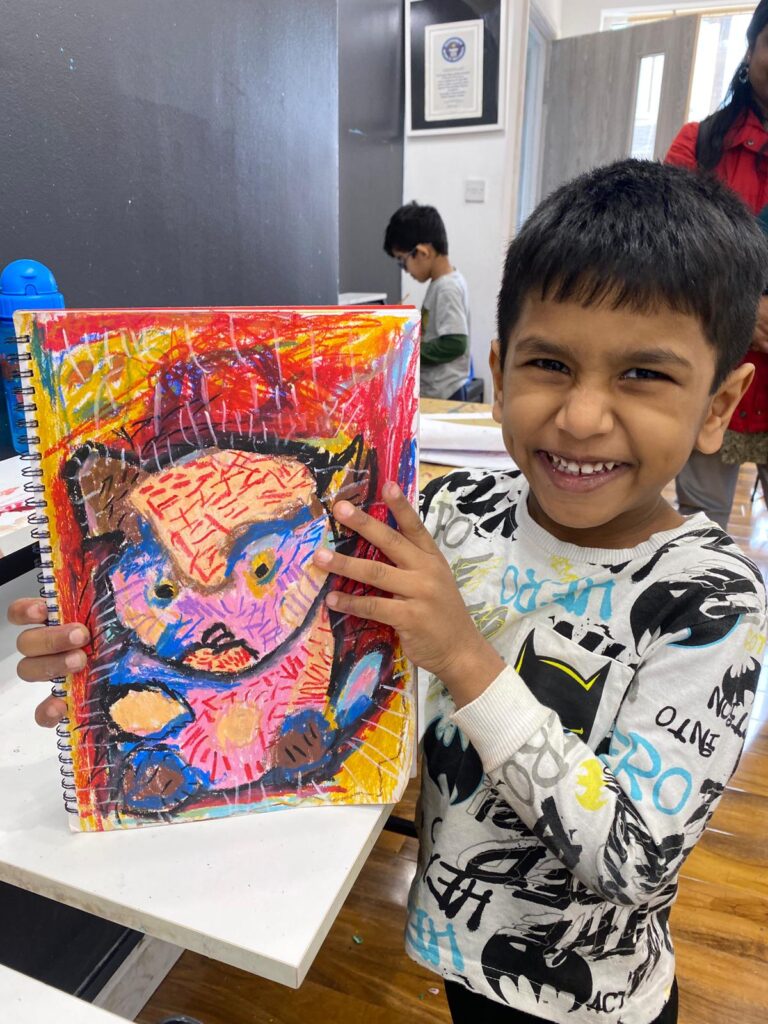
Art is not just about creating pretty pictures; it’s a means of expression, exploration, and development. While many parents might wait until their children are older to introduce them to art education, research and experts suggest that the age of four can be an ideal time to start nurturing a child’s artistic abilities. Here are several reasons why four years of age is the perfect time for kids to begin their artistic journey:
1. **Developmental Milestones**: At the age of four, children undergo significant developmental milestones, both physically and cognitively. Their fine motor skills are more developed, allowing them to hold and control art materials such as crayons, markers, and paintbrushes more effectively. This age marks a critical period for refining hand-eye coordination and manual dexterity, making it easier for children to engage in artistic activities.
2. **Cognitive Growth**: Four-year-olds are curious, imaginative, and eager to explore the world around them. They are beginning to understand concepts such as shapes, colors, and spatial relationships, which are fundamental elements of visual art. Introducing art at this age provides an avenue for children to express their thoughts, feelings, and observations in a creative and constructive manner.
3. **Emotional Expression**: Art offers children a medium to express their emotions, ideas, and experiences freely. At the age of four, children are developing a broader range of emotions and learning how to articulate them. Engaging in art activities encourages self-expression, self-awareness, and emotional regulation, fostering a sense of confidence and identity in young artists.
4. **Creativity and Imagination**: Four-year-olds possess boundless creativity and imagination. They enjoy storytelling, pretend play, and inventing their own worlds. Art provides a platform for children to channel their imagination into tangible creations, fostering creativity, problem-solving skills, and critical thinking abilities. Encouraging artistic exploration at this age nurtures a lifelong appreciation for creativity and innovation.
5. **Social Interaction and Communication**: Art education promotes social interaction and collaboration among children. Group art activities encourage communication, cooperation, and sharing, helping children develop essential social skills and empathy. Art also serves as a universal language that transcends barriers, allowing children to connect and communicate with others irrespective of language or cultural differences.
6. **Confidence Building**: Engaging in art activities empowers children to take risks, experiment, and learn from their mistakes. As they see their ideas materialize into tangible artworks, their confidence and self-esteem grow. Encouraging positive reinforcement and celebrating their artistic achievements reinforces a sense of pride and accomplishment in young artists, motivating them to continue exploring and honing their skills.
In conclusion, the age of four is a pivotal time for children to embark on their artistic journey. By providing them with opportunities to explore, create, and express themselves through art, parents and educators can lay a strong foundation for their cognitive, emotional, and social development. Investing in art education at this early age not only fosters creativity and self-expression but also cultivates essential life skills that will benefit children throughout their lives. So, let’s encourage our little ones to pick up those paintbrushes, unleash their creativity, and embark on a colorful journey of artistic discovery!